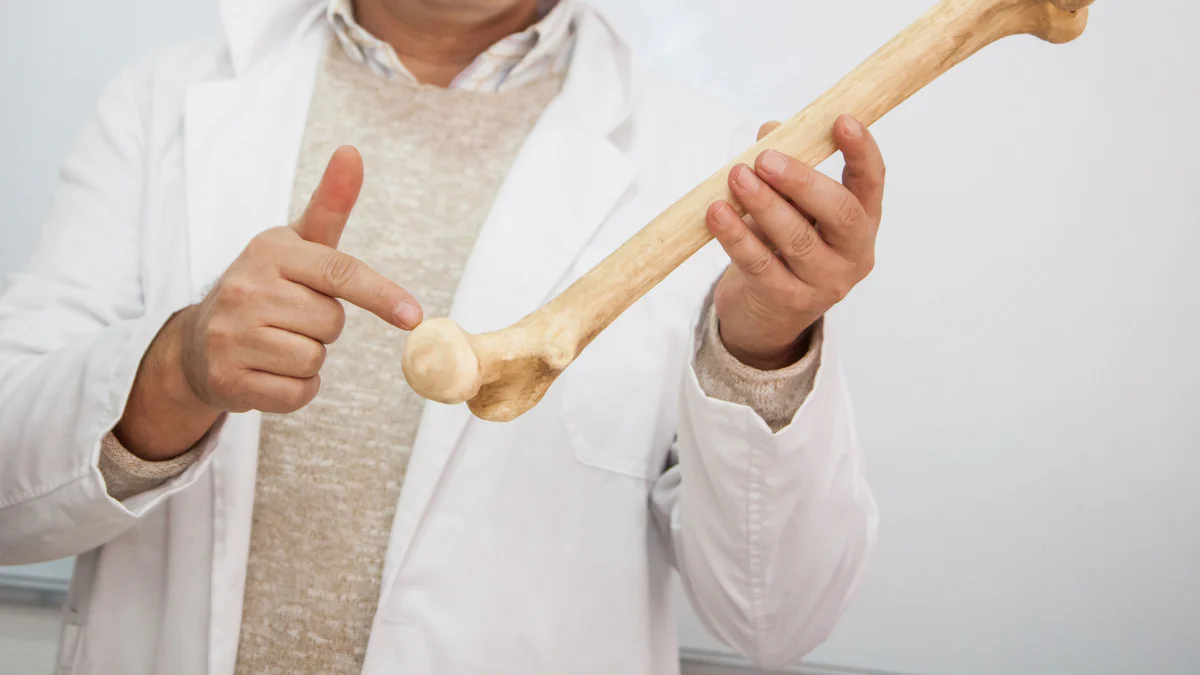




Bone often gets talked about as if it were static: something you either “have” or “lose” over time. In reality, bone is living tissue, constantly renewing itself through a process called bone remodeling.
This process is especially relevant for women in midlife. Long before osteoporosis is diagnosed, subtle shifts in bone remodeling often lead to osteopenia, a state of low bone density that reflects years of accumulated imbalance—not a sudden change.
Understanding how the bone remodeling cycle works, and how it changes during perimenopause and menopause, helps explain why bone loss can accelerate quietly—and why early, biology-aligned support matters.

What Is Bone Remodeling?
Bone remodeling is the continuous process by which old bone is broken down and replaced with new bone. This process happens throughout your entire skeleton and continues for life.
At any given moment:
- Small areas of bone are being removed
- New bone is being laid down in their place
In healthy bone, this process is balanced. Bone breakdown and bone formation stay in sync, allowing bones to maintain their strength and structure over time.
Bone remodeling serves several important functions:
- Repairs microscopic damage from everyday use
- Adapts bone structure to mechanical stress (movement and muscle forces)
- Helps regulate calcium and mineral balance in the body
The Key Mechanisms at Play
Bone remodeling is driven by a coordinated interaction between specialized cells and biological signals.
Osteoclasts: Bone Breakdown
Osteoclasts are cells that break down old or damaged bone. This process, called bone resorption, is necessary, but only when kept in balance.
Osteoblasts: Bone Formation
Osteoblasts are cells that build new bone by depositing collagen and minerals. After bone is formed, some osteoblasts become embedded in the bone matrix.
Osteocytes: The Sensors
Osteocytes are mature bone cells that act as communication hubs. They sense mechanical loading (movement and muscle force) and send signals that help regulate when and where remodeling occurs.
The Signals that Regulate Bone Remodeling
The bone remodeling process is influenced by multiple biological systems, including:
- Hormones (especially estrogen)
- Inflammatory and immune signaling
- Nutrient availability (calcium, vitamin D, protein)
- Mechanical loading from movement and muscle
- Gut health and nutrient absorption
When these signals are well regulated, bone remodeling stays in balance. With age, changes in hormonal and inflammatory signaling can disrupt that balance, allowing bone loss to accelerate.

How Bone Remodeling Changes With Age
The bone remodeling process continues throughout life, but the balance changes with age.
Early Adulthood: A Stable Balance
In early adulthood, bone formation generally keeps pace with bone breakdown. Peak bone mass is typically reached by the late 20s to early 30s.
Midlife: The Subtle Shift
As women enter their 40s, the bone remodeling process often begins to tip slightly toward breakdown. This change is gradual and asymptomatic, which is why bone loss frequently goes unnoticed during this stage.
Perimenopause and Menopause: Accelerated Loss
During perimenopause and menopause, declining estrogen levels alter immune and inflammatory signaling. This change increases the activity of osteoclasts, the cells responsible for bone breakdown, and accelerates bone resorption—often before a DEXA scan is ordered.
This is why:
- Osteopenia is so common in midlife women
- Bone density can decline years before osteoporosis is diagnosed
- Fracture risk can increase even when bone loss seems “mild”
Osteopenia reflects a remodeling imbalance—not simply aging or inadequate calcium intake.
Why Bone Remodeling Matters for Osteopenia
Osteopenia is not simply a lack of calcium. It reflects a shift in bone remodeling dynamics, where bone breakdown outpaces bone formation over time.
This helps explain why:
- Bone loss can progress even when calcium intake is adequate
- Supplements alone often fail to change bone trajectory
- Interventions that influence inflammation, muscle, and absorption matter
Supporting bone health means supporting the biological systems that regulate remodeling, not just supplying raw materials.
How to Protect Your Bones by Supporting Remodeling
Because bone remodeling is influenced by multiple biological systems, protecting bone health during midlife generally requires a broader, long-term approach.
Support Mechanical Signals
Muscle and movement provide essential signals that help bones stay strong. Try:
- Weight-bearing activity
- Resistance training
- Maintaining muscle mass
Support Nutrient Availability
Bone remodeling depends not just on nutrients, but on how well the body absorbs and uses them—a process closely tied to gut health. Ensure your diet regularly has:
- Adequate calcium and vitamin D
- Sufficient protein
- Trace minerals that support bone structure

Support Inflammatory Balance
Chronic, low-grade inflammation accelerates bone resorption. Try focusing on:
- Anti-inflammatory dietary patterns
- Adequate sleep
- Stress management
All of these influence immune signaling that affects bone remodeling.
Think Long-Term, Not Short-Term
Bone remodeling operates on a months-to-years timeline. Meaningful changes in bone health depend on consistent, daily support rather than short interventions.
The Bottom Line
Especially for women in midlife, osteopenia is often the first visible sign that bone remodeling has shifted out of balance. This process usually begins years before osteoporosis is diagnosed and well before fractures occur.
Supporting bone health at this stage means working with biology, not chasing quick fixes. Approaches that support inflammation balance, nutrient handling, muscle loading, and gut health can all influence how bones remodel over time.
For women thinking proactively about bone health during midlife, Bōndia offers a non-hormonal, biology-aligned option designed to support bone remodeling before osteoporosis develops.


