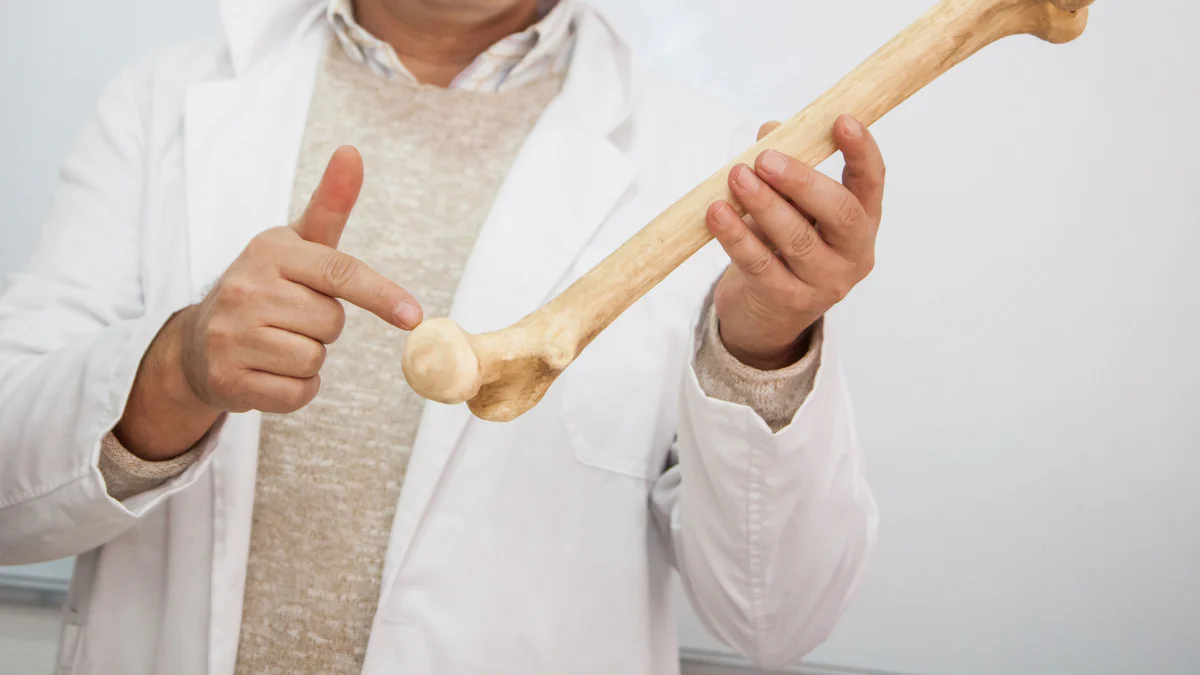





Hormone replacement therapy (HRT), also called menopausal hormone therapy (MHT), is often discussed as a treatment for bone loss during menopause—and for good reason. The connection between HRT and bone density is well established in clinical research. Estrogen and bone density are closely linked because estrogen plays a key role in regulating bone remodeling, the ongoing balance between bone breakdown (resorption) and bone formation. When estrogen fluctuates and declines during the menopausal transition, that balance can shift toward faster bone loss.
But the relationship between HRT and bone density is frequently oversimplified. Many women are left wondering: “If I’m taking hormones, are my bones protected?”
The evidence-backed answer is nuanced: systemic HRT/MHT can preserve or modestly increase bone mineral density (BMD) while you’re taking it, and it can reduce fracture risk when initiated near menopause in women with low bone density—typically when prescribed for menopausal symptoms rather than bone disease alone. But, it isn’t designed as a primary bone therapy, it doesn’t address every biological driver of bone loss, and the bone benefit is generally time-limited to the period of use.

HRT and Bone Density
Bone isn’t static. It’s living tissue that continuously remodels. Estrogen is one of the signals that helps keep remodeling in balance, largely by suppressing excess bone resorption. When estrogen falls, bone turnover typically rises, and bone loss can accelerate, particularly at sites like the spine and hip.
Because of that biology, systemic HRT has long been recognized as a therapy that can slow bone loss during midlife—even though most people encounter it first as a treatment for menopausal symptoms.
What is HRT Designed to Do?
HRT is most commonly prescribed to manage menopausal symptoms, such as vasomotor symptoms (hot flashes, night sweats) and genitourinary symptoms. In many clinical trials, hormone therapy was studied primarily for symptom relief or broader health outcomes. That said, some large studies including the Women’s Health Initiative (WHI) also evaluated fracture outcomes and demonstrated meaningful effects on bone during active treatment.
Modern guidance emphasizes that systemic HRT should be individualized—including dose, route (oral vs transdermal), and duration—based on symptoms and personal risk profile.
In clinical practice, bone benefits are often considered an important secondary advantage of systemic therapy, but they are not typically the sole reason to start, continue, or discontinue treatment.
What HRT Does Well
- Slows bone resorption by restoring estrogen signaling
- Preserves bone density during use, especially when started near menopause
- Reduces fracture risk in appropriately selected women while on therapy
What HRT Does Not Address
- Chronic, low-grade inflammation that drives bone breakdown
- Gut barrier integrity and microbiome signaling
- Nutrient absorption efficiency
- Immune pathways that regulate bone remodeling
- The fact that bone loss often resumes after HRT is stopped
Bone benefits don't just stop after stopping HRT/MHT. In reality, fracture risk appears to rebound upward in the near- to mid-term, but over the longer term, past users may still have lower fracture risk than never-users.
In practical terms: HRT acts on one major axis of bone biology (hormonal signaling) and its bone benefit is time-limited to use.
What HRT Actually Does for Bone Density (And What It Doesn’t)
1. HRT can preserve (or modestly increase) bone density
Clinical trials consistently show that systemic estrogen therapy preserves bone mineral density (BMD) at the spine and hip while therapy is ongoing. Even ultra-low transdermal doses (~0.014 mg/day) have demonstrated measurable improvements compared to placebo.
In practical terms: While you’re taking HRT, your bone density can stabilize or improve slightly—especially in the spine and hip.
2. HRT dose matters and so does context
Standard, low, and ultra-low doses can all reduce bone turnover and support BMD while therapy is ongoing. However, the strongest fracture-reduction data come from standard-dose regimens studied in large outcome trials like the Women’s Health Initiative (WHI).
In practical terms: Even lower doses of HRT can help slow bone loss—but we have the strongest fracture data for standard doses.

3. Route influences risk more than bone benefit
Oral and transdermal estrogen appear to produce similar BMD effects. The main difference lies in the safety profile.
Risk depends on your individual cardiovascular, thrombotic, and metabolic risk factors. However, based on observational data, guidelines note that transdermal estrogen may be preferred in some women with higher clotting or metabolic risk because it avoids first-pass liver effects associated with oral therapy.
In practical terms: Pills and patches appear to help bone density similarly, but the patch may carry fewer clotting-related risks for some women.
4. Estrogen is one lever in a multi-system process
Bone remodeling is regulated by more than estrogen alone. Inflammation, immune signaling, nutrient absorption, muscle loading, and gut health also influence long-term bone trajectory.
For women in midlife (especially those with osteopenia) HRT may be one layer of support, but not necessarily the whole strategy.
This is where complementary approaches that act through different pathways, such as the gut–bone axis, may be considered alongside hormone therapy.
The Question Most People Miss: What Happens After You Stop HRT?
This is the key limitation that’s often glossed over: HRT can slow bone loss while you’re taking it, but the risks rebound when you discontinuation use, especially in the first several years.
When systemic estrogen is discontinued, bone turnover tends to rise again and bone loss often returns toward an untreated trajectory over time. (How quickly and how much varies by baseline bone health and other risk factors.)
- 1-10 years after stopping, fracture risk may be similar to or modestly above never-users.
- More than 10 years after stopping, risk was again lower than never-users.
This is why clinicians often think in terms of a long-term plan for bone health, especially for women already trending toward osteopenia or osteoporosis.
Currently using HRT? Fracture risk reduction is tied to ongoing estrogen exposure and risk often rises after HRT is stopped. But long-term fracture patterns may still remain favorable versus never-users
Evidence suggests a clinically important rebound period after discontinuation. That may be a meaningful window for additional bone-support strategies.
What Bōndia Does That HRT Doesn’t
Bōndia works through the gut–bone axis, a separate and complementary biological pathway that helps regulate how bones remodel over time. Because bone health is influenced by more than hormones alone, clinicians may emphasize building a broader, bone-aware foundation—one that includes nutrition, movement, and inflammation management—alongside any HRT plan.
1. Bōndia targets inflammation-driven bone loss
After menopause, inflammation and immune signaling play a larger role in accelerating bone resorption, independent of estrogen levels.
Bōndia’s plant-derived synbiotic was designed to:
- Support gut barrier function
- Reduce inflammatory signaling that stimulates osteoclast activity
HRT does not directly address this inflammatory pathway.
2. Bōndia supports bone biology beyond hormones
Bone remodeling is influenced by:
- Immune cell signaling
- Microbial metabolites
- How efficiently nutrients are absorbed and utilized
HRT and Bōndia act through distinct biological pathways. HRT restores estrogen signaling to help regulate bone remodeling, while Bōndia works through the gut–bone axis, influencing biological processes that contribute to bone turnover over time.
3. Bōndia provides continuity when hormones aren’t used or are stopped
HRT and Bōndia may serve different roles across the bone-health timeline.
Bōndia:
- Is non-hormonal
- Can be used long-term
- Can be used alongside HRT, before HRT, or after HRT discontinuation
This makes it relevant for women who:
- Can’t take hormones
- Choose not to use HRT
- Are on low dose HRT
- Are thinking about bone health beyond the menopausal transition
4. Bōndia has clinical evidence specifically in osteopenia
Bōndia was studied in women with early bone loss (osteopenia). In a gold-standard, placebo-controlled clinical trial, Bōndia significantly slowed bone loss at clinically relevant sites in women with osteopenia.
HRT trials, by contrast, were not designed specifically for osteopenia management and were primarily powered for symptom relief.
Estrogen and Bone Density
Systemic HRT can preserve or modestly increase bone mineral density and is recognized in guidelines as effective for slowing bone loss and reducing fractures in appropriately selected women—especially when individualized by dose, route, timing, and risk profile.
But HRT is not primarily designed as a long-term, stand-alone bone therapy, and its bone benefits are generally strongest during active use. Fracture risk often rises after stopping MHT, particularly in the following 1-10 years, before later becoming lower again relative to never-users.

For those looking for non-hormonal, clinically studied support for early bone loss, Bōndia is a plant-sourced synbiotic medical food designed to support bone density through the gut–bone axis.
This article is for educational purposes only and is not medical advice. Decisions about HRT, bone density testing, and bone health support should be made with a qualified healthcare provider based on your personal health history and risk factors.


