



If you’re over 50, “feeling fine” isn’t the same as “everything’s fine.”
A lot of the biggest health threats in this decade are quiet at first: high blood pressure, early metabolic shifts, colon polyps, bone loss, and even changes in vision or hearing. The point of screening isn’t to collect scary numbers. It’s to catch patterns early, when you still have options and time is on your side.
Below is a practical, evidence-aligned checklist of health tests to discuss with your clinician. (Your personal schedule should always be tailored to your risk factors, meds, and family history.)
Health Tests to Consider for Women Over 50
|
Test/Screening |
What It Screens For |
Where To Get Tested |
How Often to Test |
What To Do with Your Results |
|
Blood sugar status (fasting glucose/A1C), cholesterol/triglycerides, kidney/liver function, electrolytes; sometimes inflammation markers based on history |
Primary care or women’s health clinic; hospital/outpatient lab (ordered by clinician) |
Often every 1–3 years in midlife depending on risk; lipids commonly every 4–6 years if low-risk |
Look at trends over time; discuss risk drivers; confirm abnormalities with repeat testing as needed; build a plan (lifestyle + meds if appropriate) |
|
|
Underactive/overactive thyroid (can mimic menopause symptoms like fatigue, weight change, palpitations). |
Ordered by PCP/OB-GYN/endocrinology; blood draw at clinic or lab. |
Not routine for everyone; test with symptoms, thyroid history, or meds that affect thyroid. Recheck per clinician if abnormal. |
Abnormal TSH + Free T4 guides next steps (repeat/confirm, add antibodies if needed, treat if indicated). Normal results = look for other causes. |
|
|
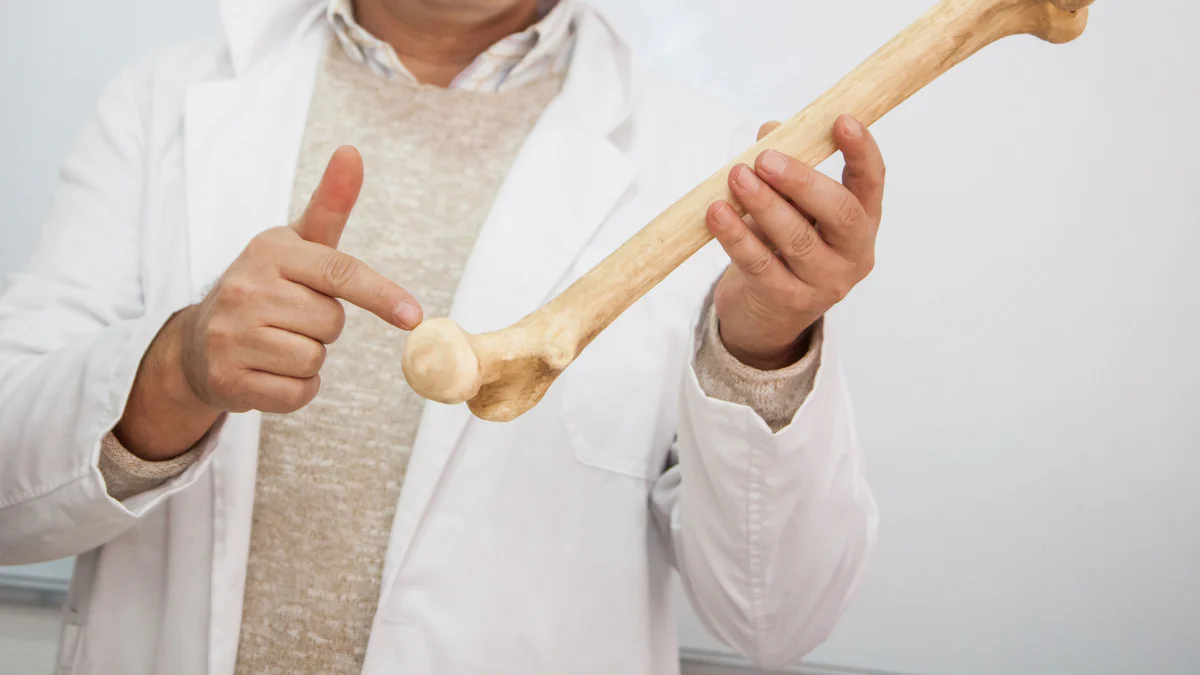
Osteopenia/osteoporosis (low bone density), especially at hip/spine |
Radiology centers, hospitals, osteoporosis/endocrinology or women’s health clinics |
Commonly at 65+ or earlier if risk factors; repeat interval depends on baseline results and risk |
Learn your T-scores and fracture risk; use results to guide strength training, nutrition (protein/calcium/vitamin D), fall prevention, and medications when indicated |
|
|
Fall risk, mobility limits, strength/balance deficits |
Physical therapy, sports medicine, some primary care/community programs |
Baseline in 50s; every 1–2 years or after falls/unsteadiness/new meds |
Identify weakest link (strength, gait, balance); start targeted training plan; request a home program and re-test progress |
|
|
Colorectal cancer and precancerous polyps |
Colonoscopy: outpatient endoscopy center/hospital; Stool tests: clinician-ordered at-home kit returned to lab |
Method-dependent (stool tests more frequent; colonoscopy less frequent); generally ages 45–75 |
Negative stool test: repeat on schedule; positive stool test: colonoscopy follow-up; colonoscopy findings determine next interval |
|
|
Breast cancer (including non-palpable tumors) |
Radiology/imaging centers, hospitals, breast clinics |
Typically every 2 years (common guideline for ages 40–74); personalized if higher risk |
Follow up promptly on “needs additional imaging”; discuss risk assessment if elevated risk; stay consistent with screening interval |
|
|
Cervical cancer risk via precancerous changes and high-risk HPV |
OB-GYN, primary care, women’s health clinic |
Ages 30–65: Pap q3y or HPV q5y or co-test q5y; may stop after 65 if adequately screened and low-risk |
Clarify what “abnormal” means; follow recommended repeat testing/colposcopy timeline; track HPV status and follow-up plan |
|
|
Melanoma, basal cell, squamous cell; suspicious lesions |
Dermatology clinic (primary care can triage) |
Risk-based (more frequent if high sun exposure, many moles, personal/family history) |
Track changing spots (photos help); complete recommended biopsies; ask about margins and follow-up schedule |
|
|
Vision changes; glaucoma, cataracts, macular degeneration; sometimes systemic disease clues |
Optometrist or ophthalmologist |
Often every 1–3 years in late 50s/early 60s; every 1–2 years after 65 (or more often if risk) |
Ask about early disease signs beyond refraction; follow monitoring/treatment plan for pressure, cataracts, retinal changes |
|
|
Hearing loss affecting communication and safety |
Audiology clinic, ENT; some primary care screening |
Baseline after 50 + periodic re-checks; sooner with symptoms/noise exposure |
Review frequency-specific loss; discuss hearing aid options, trial periods, and follow-up support |
|
|
Microbiome profiling; may support evaluation of persistent GI symptoms (not a standalone disease diagnosis) |
GI clinic for medical workup; at-home microbiome testing companies |
Not a routine annual screen; situational (repeat only if tracking an intervention) |
Use as a discussion starter (not a diagnosis); prioritize fundamentals (fiber diversity, sleep, movement); pursue medical evaluation when symptoms persist or red flags exist |
Why Health Testing Matters More After 50
After 50, the health risks that matter most tend to share one frustrating trait: they’re silent until they’re not.
High blood pressure doesn’t come with a warning label. Early metabolic shifts can build for years before they show up as symptoms. Bone loss can progress quietly until a fracture forces the conversation. And changes in vision, hearing, balance, or skin can be gradual enough that you adapt without realizing what you’ve lost.
Health testing is how you stop guessing.
It turns “I feel fine” into actual baseline measurements you can track, trends you can catch early, and risks you can act on, while your options may be wide.
A smart screening plan after 50 does four things:
- Finds problems earlier than symptoms can. That’s the whole advantage of screening: catching change before it becomes damage.
- Creates a baseline. One result is a snapshot. Multiple results over time reveal your trajectory.
- Targets the right next step. A borderline result doesn’t always mean medication. Sometimes it means monitoring, lifestyle shifts, or more specific testing.
- Protects your independence. Mobility, strength, and cognition are downstream of heart health, bone health, vision, hearing, and fall risk. Screening is maintenance for the life you want to keep living.
The goal isn’t to medicalize your life. It’s to give you leverage so you can make decisions earlier, with clarity, and on your terms.

Questions to Ask Your Doctor In Your 50s
Preventive care works best when you show up with questions. Not because you need to challenge your clinician, but because midlife health is full of tradeoffs, and you deserve clarity.
Use these prompts to make your next visit more productive.
“What screenings am I due for this year, and why?”
Ask for a short list and the reasoning: age-based, risk-based, or because of a past result.
“Based on my family history, should I start anything earlier or screen more often?”
Family history can change timing and intensity of screening.
“What’s my cardiovascular risk profile right now?”
Follow up with: “Which number matters most for me: blood pressure, LDL cholesterol, A1C, weight, or something else?”
“Should I get a bone density baseline now, or is it better to wait?”
If you’ve never had a DEXA scan, ask what factors in your history make earlier testing more or less useful.
“If a result comes back borderline, what’s the plan?”
This is the underrated question. You’re asking for the decision tree upfront:
-
When do we repeat?
-
What changes should I make first?
-
When does medication enter the conversation?
“What symptoms should trigger a sooner follow-up?”
Get clear on red flags (new bleeding after menopause, unexplained weight loss, chest pain, black/tarry stools, new severe headaches, sudden balance changes, etc.).
“Can we review vaccines and preventive care at the same time?”
Many preventive guidelines explicitly emphasize that screening and prevention should be personalized and revisited over time.
“What are we doing to protect my long-term mobility?”
That single question connects bone density, strength, balance, vision/hearing, and fall prevention into one coherent plan because in your 50s, health isn’t just about living longer. It’s about staying able.
How to Personalize Your 50+ Screening Plan
A “women over 50 screening checklist” is a helpful starting point, but it’s not the finish line. The best screening plan is the one that matches your risk profile and gets revisited regularly through shared decision-making with your clinician.
Here are the levers that most often change what you need and when you need it:
- Family history (it’s more powerful than most people think). Heart disease, stroke, diabetes, osteoporosis, breast/ovarian cancer, and colorectal cancer can cluster in families. A clear family history helps your clinician decide whether you should start earlier, screen more often, or consider additional risk assessment.
- Your personal history and prior results. “Normal last time” matters, but so does “borderline last time.” Trends in blood pressure, cholesterol, A1C, pap/HPV results, mammograms, and bone density are often more informative than a single snapshot.
- Medication and medical conditions. Some medications and conditions shift risk in predictable ways, impacting blood pressure, glucose, bone density, and fall risk. This is where your clinician can connect the dots and adjust the plan accordingly.
- Your menopause timing and bone-risk signals. Menopause is a biological accelerant for bone loss in many women. If you’ve had early menopause, prior fractures, long-term steroid use, low body weight, smoking history, or other risk factors, it can be worth discussing earlier bone density testing and fall-risk prevention.
- Access and follow-through. The best test is the one you’ll actually do. For some screenings (like colon cancer screening), there are multiple validated options. Your plan should fit your life, so it stays consistent over time.
If you want a fast way to make this actionable, bring a one-page note to your next visit with:
- your family history (parents/siblings/grandparents if known),
- your last screening dates/results, and
- your top 3 symptoms or concerns.
That gives your clinician what they need to tailor your plan without turning your appointment into a scavenger hunt.
This article is for educational purposes only and is not medical advice. Always consult your physician or a qualified healthcare professional before starting a new exercise program, especially if you have osteopenia or osteoporosis, a history of fractures, chronic conditions, pain, or are pregnant or postpartum.


