


Bone loss is often invisible—until it isn’t.
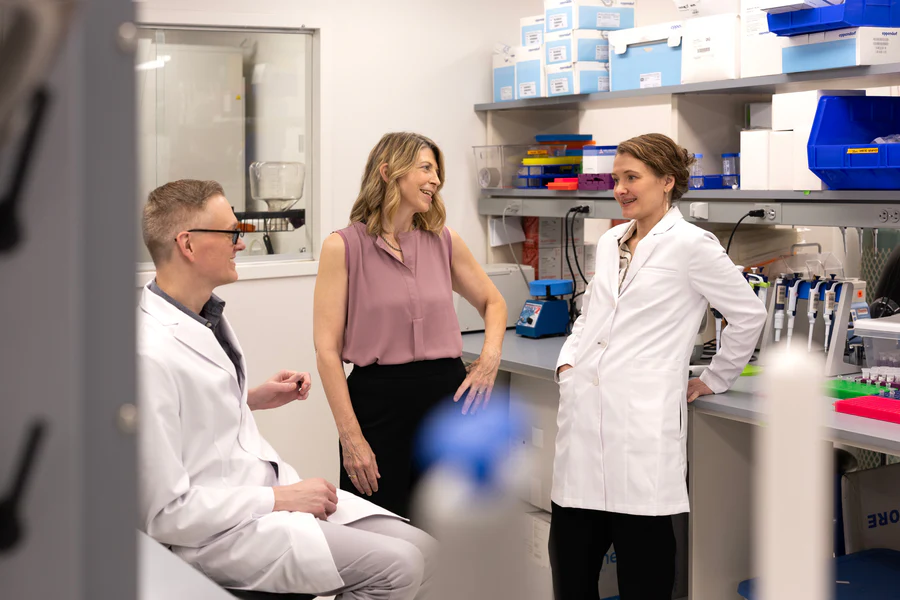
On a recent episode of New Frontiers in Functional Medicine®, Dr. Kara Fitzgerald sat down with Sōlaria Biō scientists Mark Charbonneau, PhD, and Alicia Ballok, PhD, to discuss why bone loss accelerates with aging and what clinicians may be overlooking.
The conversation moved beyond the traditional estrogen-only explanation and into a deeper systems view of skeletal health, inflammation, and the gut.
Why Bone Loss Accelerates With Aging: It’s Not Just Estrogen
One of the central themes of the discussion was that bone remodeling is not purely structural—it’s immunological.
As Mark explained during the episode, bone is living tissue constantly undergoing cycles of breakdown and rebuilding. The cells responsible for bone breakdown, osteoclasts, are activated through inflammatory pathways.
Dr. Kara Fitzgerald summarized the concept succinctly:
“…if we could control the inflammation, maybe with or without HRT… and bone loss patients are really good candidates for [HRT.] But a potent, potent driver, perhaps greater, is the inflammation driven by an imbalanced gut.”
The takeaway: estrogen decline during menopause plays an important role, but inflammation may be a parallel driver of accelerated bone loss with aging.
How Gut Health and Inflammation Influence Bone Remodeling
The episode then explored how gut health intersects with skeletal biology.
Roughly 70% of the body’s immune cells are associated with the gut. The integrity of the gastrointestinal barrier influences systemic immune signaling, including signals that regulate osteoclast activity.
Alicia Ballok, PhD, described the mechanism:
“…Bōndia works via improving the gastrointestinal barrier, reducing immune cell signaling… this could be beneficial for any individual who is experiencing bone loss, not necessarily just individuals who are experiencing bone loss as a result of loss of estrogen.”
This broader framing matters. Bone loss with aging is not limited to postmenopausal women. Inflammatory signaling can influence bone remodeling across sexes and age groups.

What the 12-Month Clinical Trial Revealed About Bone Loss
During the podcast, the team also reviewed findings from Bōndia’s 12-month randomized, placebo-controlled clinical trial in postmenopausal women.
Key outcomes discussed included:
- Significant slowing of bone loss at clinically relevant sites, including the hip
- Up to 85% reduction in femoral neck bone loss in women with osteopenia compared to placebo
- Reductions in CTX, a biomarker of bone resorption, in responsive subgroups
Importantly, the trial measured both imaging endpoints (DEXA) and biochemical markers of bone turnover, strengthening the biological plausibility of the findings.
Mark emphasized why that level of rigor matters:
“Many supplements don’t necessarily have the same level of evidence, but we want people to be confident in what they’re putting in their bodies.”
The podcast underscored a recurring theme in Sōlaria Biō’s research philosophy: mechanistic science paired with clinical validation.
Why Bone Loss With Aging Often Goes Undetected
Another important moment in the discussion addressed screening.
Bone loss is typically asymptomatic until a fracture occurs. Many individuals do not receive DEXA screening until their mid-60s, despite accelerated bone remodeling beginning years earlier during the menopausal transition.
In their own research, the Sōlaria Biō team found that a meaningful percentage of women screened for the study had osteoporosis without knowing it.

“These were women within one to six years post-menopause… not anywhere close to 65,” Alicia added.
The episode reinforced a clear message: bone health deserves earlier attention.
A Systems View of Bone Loss and Aging
Rather than positioning bone loss as a single-pathway problem, the conversation framed it as a systems issue involving:
- Hormonal changes
- Immune signaling
- Gut barrier integrity
- Inflammatory tone
- Body composition
This broader lens reflects a functional and integrative view of aging—one that considers how multiple physiological systems converge on bone remodeling.
Listen to the Full Episode
To hear the full discussion between Dr. Kara Fitzgerald, Mark Charbonneau, PhD, and Alicia Ballok, PhD:
- Listen on SoundCloud → soundcloud.com/dr-kara-fitzgerald/endophytes-bone-health-bondia
- Watch on YouTube → youtube.com/watch?v=qkvCaaOnVX4
To explore the clinical research referenced during the episode:
-
Review the Bōndia Clinical Evidence → Bōndia Clinical Trial Result Highlights


