




When it comes to bone health, claims are common. Clinical proof is not.
Bōndia clinical evidence is based on a randomized, double-blind, placebo-controlled trial in women with osteopenia published in Osteoporosis International, a leading peer-reviewed journal in the field.
Here’s how the study was designed, what it measured, and what the results showed.

Study Summary: Osteoporosis International (2025)
Study Type: Randomized, double-blind, placebo-controlled
Population: Postmenopausal women
Focus: Bone loss and synbiotic intervention
Key Finding: This study evaluated a synbiotic medical food (SBD111) and demonstrated a significant reduction in the rate of bone loss in higher-risk populations.
How We Designed the Bōndia Clinical Trial
The Bōndia clinical trial followed the gold standard framework for interventional research:
- Randomized: Participants were assigned to active or placebo groups by chance
- Double-blind: Neither participants nor researchers knew who received Bōndia
- Placebo-controlled: Results were compared against an inactive control
- Peer-reviewed and published: Results were published in Osteoporosis International
The study ran for 12 months, allowing researchers to observe changes across a full bone remodeling cycle. Participants in the active group received Bōndia daily for all 12 months.
Importantly, participants in both groups received 800 IU of vitamin D3, ensuring that any differences observed could be attributed to the synbiotic formulation—not background nutrient correction.
Bōndia is a plant-sourced synbiotic formulation containing:
- 4 proprietary probiotic strains
- 2 prebiotic fibers
- Vitamin D3
The formulation was designed to support bone health through the gut–bone axis—a biological pathway linking gut health, immune signaling, and bone remodeling.
The Population We Studied: Women With Osteopenia
The trial enrolled postmenopausal women diagnosed with osteopenia, defined by bone mineral density (BMD) T-scores between –1.0 and –2.5.
This population is clinically important because:
- Osteopenia often progresses silently
- A significant proportion of fractures occur in women with osteopenia, not osteoporosis
- Early intervention may influence long-term skeletal outcomes
By focusing on women with early bone loss, the study evaluated Bōndia in a prevention-forward context.

What the 12-Month Clinical Study Shows
Primary Outcome: Changes in Bone Mineral Density
Bone mineral density was measured using DEXA (dual-energy X-ray absorptiometry), the clinical gold standard for assessing bone density.
At the end of 12 months:
- Women with osteopenia experienced an 84.5% reduction in femoral neck bone loss compared to placebo.
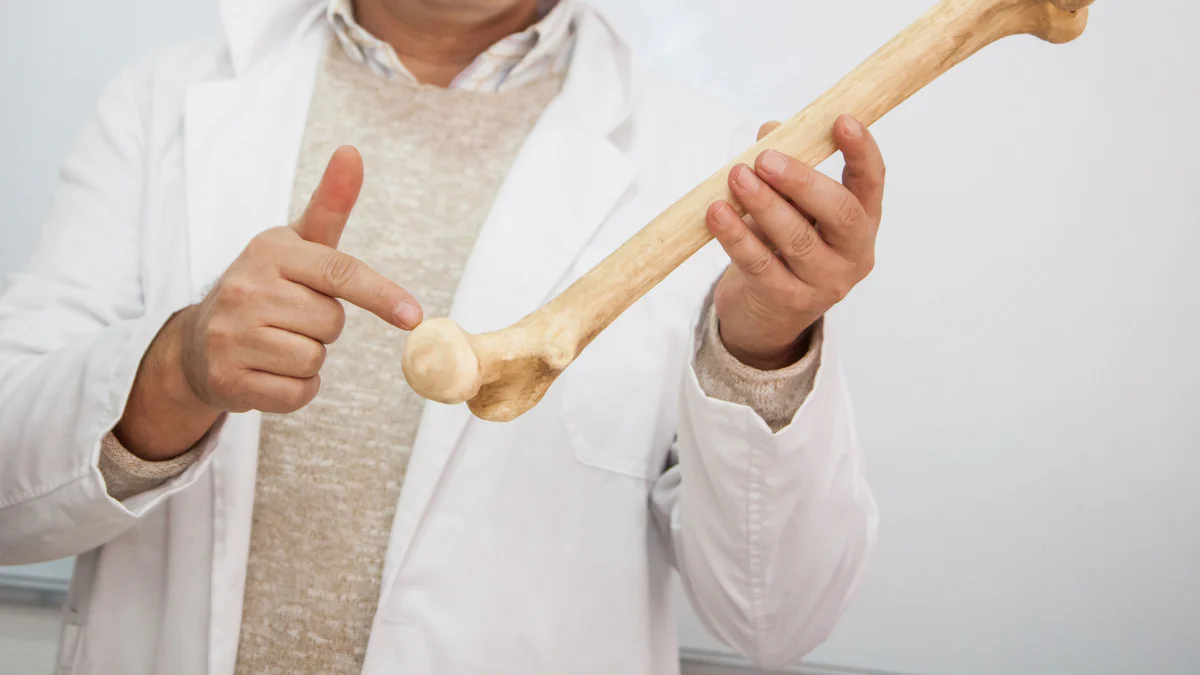
- The femoral neck is a clinically significant fracture site, closely associated with hip fracture risk and long-term mobility outcomes.
“During the study, at-risk women taking Bōndia were losing just one-fifth the bone that the control group was losing. That means, over the course of 5 years, their bones would age one year as opposed to five years.” - Alicia Ballok, PhD

Because bone remodeling unfolds gradually, the 12-month duration strengthens the clinical relevance of these findings.
The femoral neck is a clinically relevant site due to its association with hip fractures and long-term mobility outcomes. Hip fracture survivors face substantial loss of independence and quality of life.

Subgroup Findings: BMI and Body Fat
Researchers also analyzed outcomes across different metabolic profiles.
- Women with BMI ≥30 experienced a 73.7% reduction in total hip bone loss compared to placebo.
- Women with ≥40% body fat experienced a 59.5% reduction in hip bone loss compared to placebo.
These findings are notable because higher body weight does not reliably protect against bone loss. In fact, excess adiposity is associated with inflammatory signaling that can accelerate bone resorption.
The subgroup data suggest that inflammation-related bone loss may be particularly responsive to gut-directed nutritional intervention. Plus, Bōndia eased GI symptoms by 78.9%.
Secondary Outcome: Bone Turnover Markers
In addition to DEXA measurements, researchers assessed biochemical markers associated with bone turnover:
- CTX (C-terminal telopeptide of type I collagen) – a marker of bone resorption
- P1NP (Procollagen Type 1 N-Terminal Propeptide) – a marker of bone formation
The active group demonstrated changes consistent with reduced bone resorption activity, aligning with the observed differences in BMD.
This dual confirmation—imaging plus biological markers—supports the physiological plausibility of the findings.
Safety and Tolerability
For any intervention intended to support bone health over time, safety is not secondary—it is foundational. Bone remodeling unfolds over months to years, which means tolerability and long-term usability matter.
Over the 12-month study period:
- Bōndia was well tolerated
- No serious adverse events were attributed to the product
- Overall adverse event rates were comparable between the Bōndia and placebo groups
- Participant retention remained high throughout the study
For individuals thinking about long-term bone health — particularly those with osteopenia or in midlife — safety comparable to placebo is clinically relevant. Bone-support strategies often require sustained use, and an intervention must be suitable for ongoing integration into daily life.

What Bōndia Clinical Evidence Does (and Doesn’t) Show
The published data demonstrate that Bōndia:
- Slowed bone loss in women with osteopenia over 12 months
- Produced measurable changes at clinically relevant skeletal sites
- Showed alignment between BMD outcomes and bone turnover markers
- Was safe and well tolerated in a controlled trial setting
What it does not claim:
- That Bōndia replaces osteoporosis medications
- That it permanently “resets” bone biology
- That it works without consistency over time
While no single intervention replaces comprehensive bone health management—including resistance training, adequate nutrition, and clinical monitoring—the Bondia clinical evidence supports its role as a medical food designed for the dietary management of osteopenia under medical supervision.
The Bottom Line
Osteopenia is often treated as something to “watch and wait.” The clinical evidence behind Bōndia reflects a different philosophy: address early bone loss with a biologically informed, research-backed approach before osteoporosis develops.
For women with osteopenia—or those looking to support bone health during midlife—clinically validated gut–bone support with Bōndia offers a new option grounded in published science.
As always, decisions about medical foods, supplements, or medications should be made in consultation with a healthcare provider, particularly for individuals with complex medical histories or concurrent therapies.


