

Bone loss doesn’t make noise. It doesn’t hurt. It doesn’t announce itself. And for many women, it accelerates years before anyone mentions a standard bone density screening.
That’s why we’re partnering with DexaFit: to make it easier to measure your baseline bone density earlier, understand what’s changing in your body, and take action with real data.

Why Baseline Bone Density Testing Matters
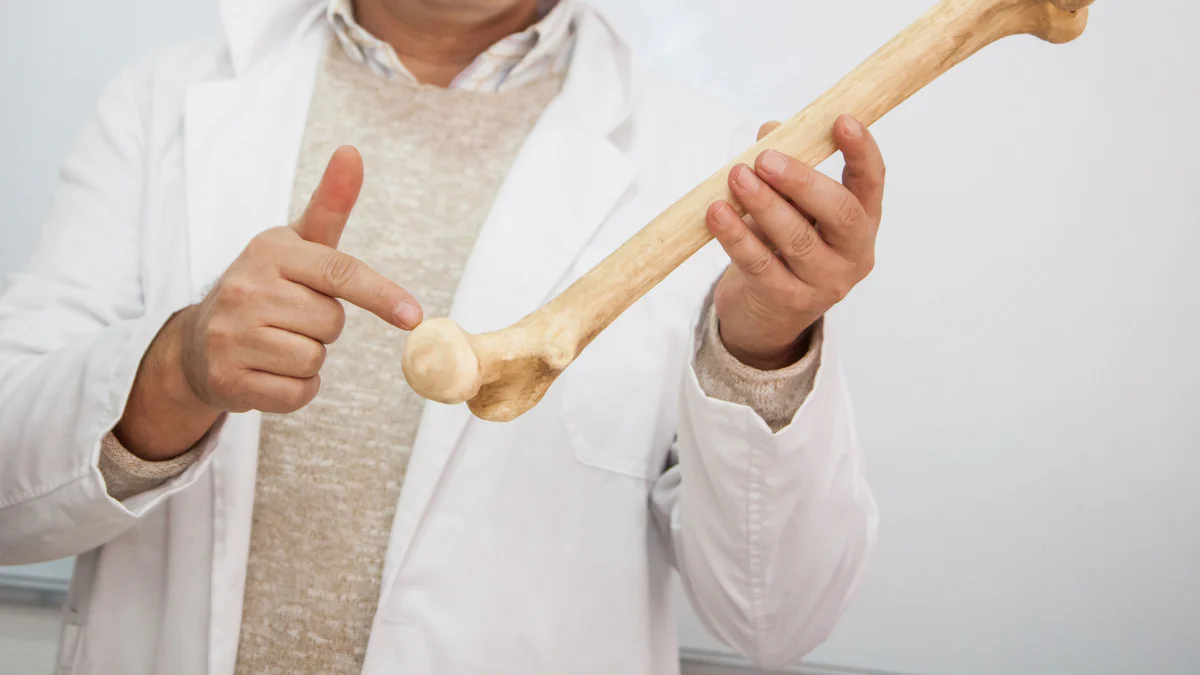
A baseline DEXA scan gives you a clear starting point. It measures bone mineral density (BMD) at key fracture-prone sites like the hip (femoral neck) and spine, and it can help identify low bone mass (osteopenia) before osteoporosis ever enters the picture.

When you know your baseline, you can track change, identify risk sooner, and build a bone-health plan that matches your biology.
DEXA results are commonly reported as T-scores, which compare your bone density to that of a healthy young adult reference population:
- Normal: T-score -1.0 or higher
- Osteopenia (low bone mass): between -1.0 and -2.5
- Osteoporosis: -2.5 or lower
One of the most important things women deserve to hear sooner is this: risk isn’t binary. Fracture risk increases progressively as bone density declines, even before someone meets the diagnostic threshold for osteoporosis.
Baseline testing is the beginning of a plan you can actually measure.

What DexaFit Offers (and Why We Like It)
DexaFit specializes in advanced DEXA-based testing, including:
1. DexaFit AI-Enhanced DEXA Body Composition Scan
The DexaFit AI-enhanced DEXA scan is the gold standard for tracking your lean mass, fat mass, visceral fat, and provides total body bone mineral density (BMD).
- Quick & precise: Get comprehensive results in only 6 to 8 minutes.
- Measure what matters: Track lean mass, fat mass, bone mass, visceral fat and more.
- Optimize performance: Guide your total-body strength and performance goals with precision.
2. DexaStrong Site-Specific Bone Density Scan
This scan is a targeted site-specific DEXA scan (typically of the hip, spine, or forearm), clinically focused for tracking osteoporosis or bone loss risk.
- Quick & focused: Target key areas like the spine, hip, or forearm in just minutes.
- Measure what matters: Assess bone mineral density at clinically relevant, high-risk skeletal sites.
- Strengthen with insight: Detect changes early and support long-term bone health with precision.

Total-Body vs. Site-Specific DEXA Scans: What’s the Difference?
Not all DEXA scans are built to answer the same kind of baseline question. A total-body scan helps you understand the whole system, and a site-specific scan helps you understand the areas at highest risk. Use these details to choose the scan that best serves you.
Total-Body DEXA Scan: Your Big-Picture Baseline
A total-body DEXA body composition scan gives you a full view. It can quantify lean mass, fat mass, visceral fat, and provide a total-body bone mineral density (BMD) snapshot. That’s powerful because bone health doesn’t live in isolation—muscle, body composition, and bone often move together over time.
A total-body scan is helpful if you want to:
- Establish a whole-body baseline you can track year over year
- Monitor changes in lean mass while you train, change nutrition, or lose weight
Site-Specific DEXA Scan: Your Bone-Risk Baseline
A site-specific bone density scan narrows in on the bones that matter most for long-term risk, typically the hip and spine (and sometimes the forearm). Clinicians often pay special attention to these areas because they’re both common fracture sites and highly informative for tracking bone loss over time.
Hip fracture survivors, in particular, face a substantial loss of independence and quality of life. Only 40-60% of survivors regain their pre-fracture mobility, while 10-20% are placed in nursing homes or assisted living post-fracture.
A site-specific scan is a fit if you want to:
- Get a more focused bone baseline at key fracture-prone sites
- Track change where it tends to be most consequential (especially hip and spine)
In Sōlaria Biō’s research, we’ve seen why where you measure matters. In our gold standard clinical trial of early postmenopausal women, groups at higher risk (including women with osteopenia and higher BMI) experienced the greatest amount of bone preservation (84.5%) at the hip region, particularly the femoral neck.
That matters because the hip isn’t just a number on a report. It’s a cornerstone of mobility and independence.
Get Your DexaFit Scan for 25% Off
Sōlaria Biō partners with DexaFit so you can connect “what the scan says” with “what your biology is doing.”
If you’ve been waiting for the right time to understand your bone density, consider this your nudge.

Real Reviews from DexaFit Visitors
“Stopped by DexaFit and walked out with an “A”! Great service, super friendly, and really easy and convenient. I’ll be back for the A+ next time!” -George Tourkakis
“DexaFit is such an incredible resource if you are looking to track and maximize your health and fitness.” -Susan Massucco
“My DexaFit visit was incredibly informative and eye-opening. The tests provided valuable insights that helped me tailor my fitness and nutrition plan for optimal results. Thanks to DexaFit, I have been able to effectively lose fat, gain muscle, and improve my overall health and happiness.” -Renata Morales

DexaFit products and services are intended for general wellness and to support a healthy lifestyle. They are not for diagnosing, treating, or managing any disease or medical condition. Testing is fulfilled by third-party providers. These services should not be used for medication management or dosing decisions. Please note that VO2 Max and/or RMR testing may not be available at all DexaFit affiliate locations.


