
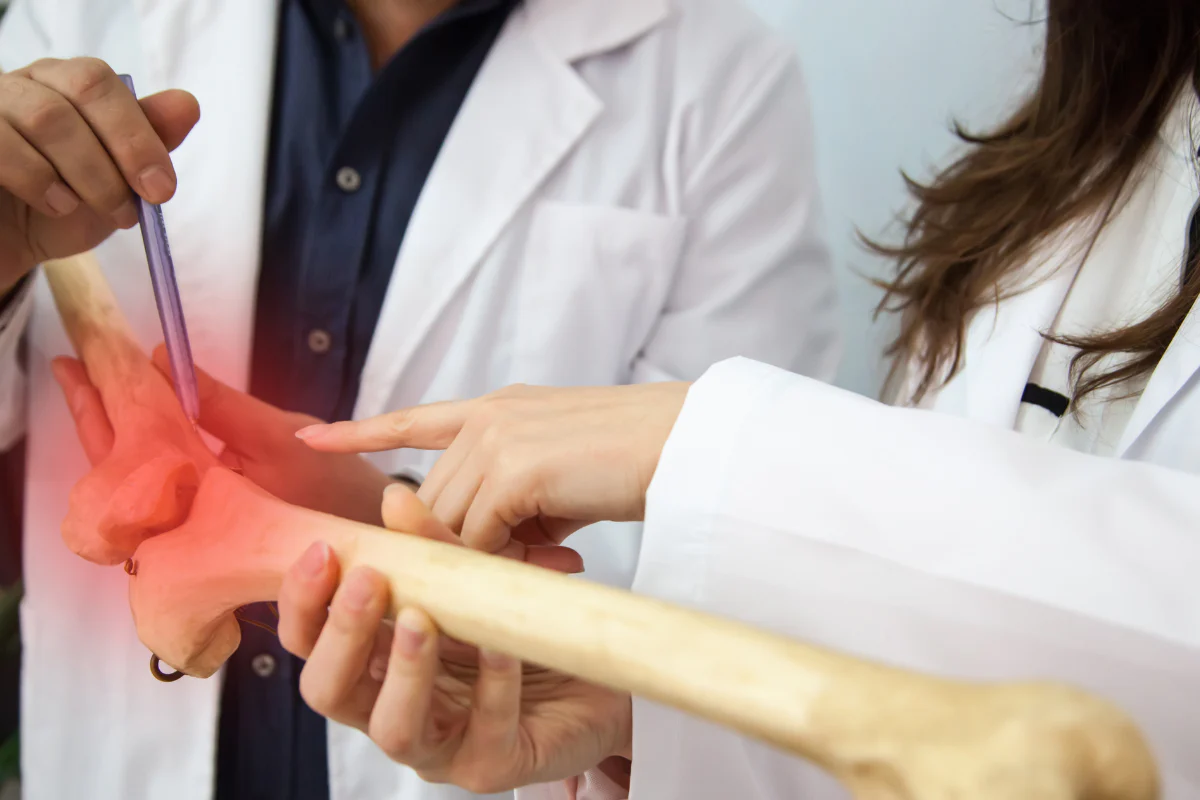

Aging is universal, but how we experience it is not. At Sōlaria Biō, our research is focused on a central question: how do we support the biology of aging, not just respond to its consequences?
Our work explores how the microbiome—specifically the microbes found in fruits and vegetables—interacts with the human body to influence inflammation, immune signaling, and age-related conditions like bone loss, rheumatoid arthritis, and cellular decline.
We apply a level of scientific rigor more commonly associated with pharmaceutical research to the development of medical foods: an approach reflected in our growing body of peer-reviewed publications across leading scientific journals.
Key Takeaways About Sōlaria Biō Research
- The microbiome plays a central role in regulating inflammation and aging-related conditions
- Bone loss is influenced by immune signaling and gut health (the gut–bone axis)
- Edible plant-derived microbes can influence human health and aging
- The benefits of synbiotic medical foods can be evaluated using rigorous scientific methods
- Peer-reviewed publications are central to validating microbiome-based approaches
Sōlaria Biō’s Peer-Reviewed, Published Scientific Studies
Sōlaria Biō’s research is supported by a growing portfolio of peer-reviewed publications across microbiome science, inflammation, and aging. These studies span discovery, preclinical models, and human research, demonstrating a consistent commitment to scientific rigor.
Inflammation and Gut–Bone Axis Research
A core focus of Sōlaria Biō research is the gut–bone axis: the relationship between the gut microbiome, immune system, and bone remodeling. The publications show how changes in gut barrier function and microbial composition can influence systemic inflammation and bone loss.
Osteoporosis International - 2025
August 15, 2025
A randomized, double-blind, placebo-controlled clinical study to evaluate the efficacy of the synbiotic medical food, SBD111 (Bōndia), for the clinical dietary management of bone loss in menopausal women.
Schott EM, Charbonneau MR, Kiel DP, Bukata S, Zuscik MJ, Rosen C, Ballok A, Toledo GV, Steels E, Huntress H, Rao A, Ebelt P, Travison TG, Soto‑Girón MJ, Wolff I, Easson Jr D, Engelke K, Vitetta L
Journal of Functional Foods - 2025
August 11, 2025
A synbiotic medical food improves gut barrier function, reduces immune responses, and inhibits osteoclast activity in models of postmenopausal bone loss aligned with clinical outcomes.
Green RS, Roy T, Diaz-Infante Morales D, Morrow C, Neilson R, Schott EM, Charbonneau MR, Ballok AE, Motyl KJ, Toledo GV
American Journal of Physiology Endocrinology Metabolism - 2022
April 1, 2022
Development of a synbiotic that protects against ovariectomy induced trabecular bone loss.
Lawenius L, Gustafsson KL, Wu J, Nilsson KH, Movérare-Skrtic S, Schott EM, Soto-Girón MJ, Toledo GV, Sjögren K, Ohlsson C
Mining the Edible Plant Microbiome Research
Sōlaria Biō research is built on the discovery that fruits and vegetables contain beneficial microbes that can transfer to the human gut. These foundational studies establish the role of plant-derived microbes in shaping the human microbiome.
Gut Microbes - 2025
September 4, 2025
Linking the edible plant microbiome and human gut microbiome: a study that establishes a possible continuum from farm to fork and health.
Berg G, Toledo GV, Schierstaedt J, Hyöty H, Wicaksono WA
Gut Microbes - 2023
September 10, 2023
The edible plant microbiome: evidence for the occurrence of fruit and vegetable bacteria in the human gut.
Wicaksono W, Cernava T, Wassermann B, Abdelfattah A, Soto-Girón M, Toledo G, Virtanen S, Knip M, Hyöty H, Berg G
Scientific Reports - 2021
December 15, 2021
The Edible Plant Microbiome represents a diverse genetic reservoir with functional potential in the human host.
Soto-Girón MJ, Kim JN, Schott EM, Tahmin C, Ishoey T, Mincer TJ, DeWalt J, Toledo G
Product Safety Research
In addition to efficacy, Sōlaria Biō research includes safety and tolerability studies evaluating microbiome-based formulations. These studies help ensure that our synbiotic medical foods are appropriate for ongoing use.
Beneficial Microbes - 2026
February 9, 2026
Targeted detection of microbes in synbiotic medical foods SBD111 (Bōndia) and SBD121 to evaluate gut persistence: a randomised, open label trial.
Miller KJ, Wolff M, Montes de Oca Valeriano LA, Soto-Girón MJ, Jangi S, Schott EM, Charbonneau MR, Ballok AE, Toledo GV
Food and Chemical Toxicology - 2024
September 1, 2024
Food safety assessment and 28-day toxicity study of the synbiotic Medical Food consortium SBD121.
Easson DD, Murphy VA, Ballok AE, Soto-Girón MJ, Miller KJ, Charbonneau MR, Schott EM, Greene T, Rodricks J, Toledo GV
Journal of Microbiology & Experimentation - 2023
January 1, 2023
Randomized clinical trial to test the safety and tolerability of SBD111 (Bōndia), an optimized synbiotic medical food combination designed for the dietary management of the metabolic processes underlying osteopenia and osteoporosis.
Sahni S, Schott E, Caroll D, Soto-Girón M, Corbett S, Toledo G, Kiel D
Food and Chemical Toxicology - 2022
October 1, 2022
Food safety assessment and toxicity study of the synbiotic consortium SBD111 (Bōndia).
Easson DD, Murphy VA, Ballok AE, Soto-Girón MJ, Schott EM, Rodricks J, Toledo GV
Metabolic Health Research
Nutrients - 2020
July 9, 2020
Targeting the Intestinal Microbiota to Prevent Type 2 Diabetes and Enhance the Effect of Metformin on Glycaemia: A Randomised Controlled Pilot Study.
Palacios T, Vitetta L, Coulson S, Madigan CD, Lam YY, Manual R, Brisket D, Hendy C, Kim JN, Ishoey T, Soto-Girón MJ, Schott EM, Toledo G, Caterson ID
Why Sōlaria Biō Research Matters for Aging and Bone Health
Sōlaria Biō research contributes to a growing body of evidence showing how the microbiome influences aging and inflammation. Conditions like bone loss, autoimmune disease, and metabolic decline are increasingly linked to chronic inflammation, and the gut plays a central role in regulating that process.
By studying how plant microbes interact with the human microbiome, Sōlaria Biō research is helping define a new category of interventions that work through biology, not just supplementation. This approach has the potential to reshape how we think about aging and long-term health.
Our growing body of peer-reviewed publications reflects a consistent focus on rigor, reproducibility, and biological relevance. Because advancing human health starts with evidence.


